1. Overview
In mechanical design, a material handling module is a design unit responsible for moving, aligning, feeding, transferring, and discharging raw materials, semi-finished products, or finished products within a machine or between process stages.
A material handling module does not usually change the shape or physical properties of the product directly.
However, it has a major influence on overall machine productivity, operational stability, work quality, safety, maintainability, and cleanability.
Even if a machine has an excellent processing function, the overall performance of the equipment will decrease if the material is not supplied consistently or if the product is not transferred to the correct position. Therefore, a material handling module should not be treated as a simple auxiliary structure. It should be understood as a core function module that determines the flow of the machine system.
2. Definition
A material handling module is a physical design unit that performs the following functions:
This module controls the position, direction, speed, spacing, and flow of raw materials or products.
Typical elements include:
Feeding section
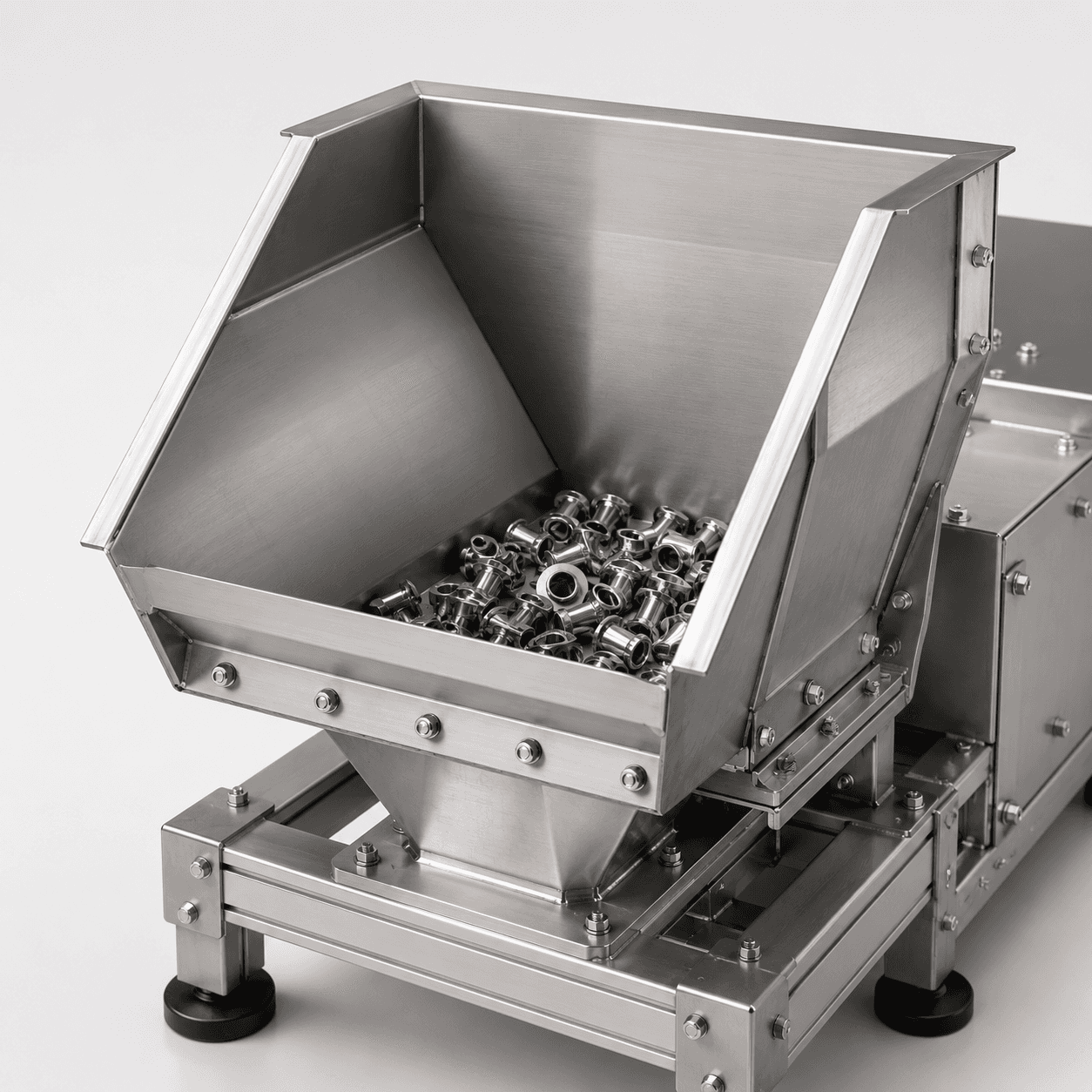
Hopper
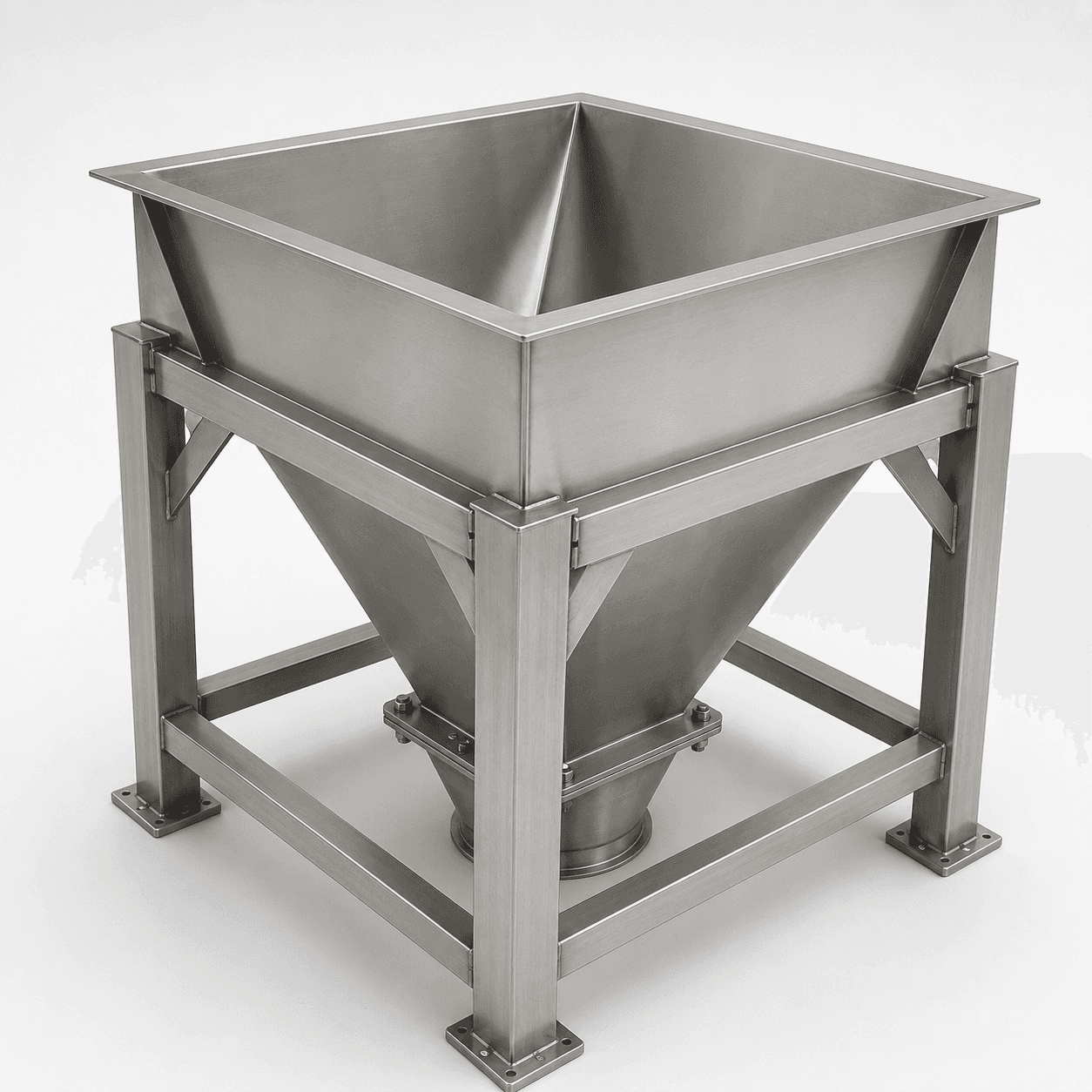
Feeder
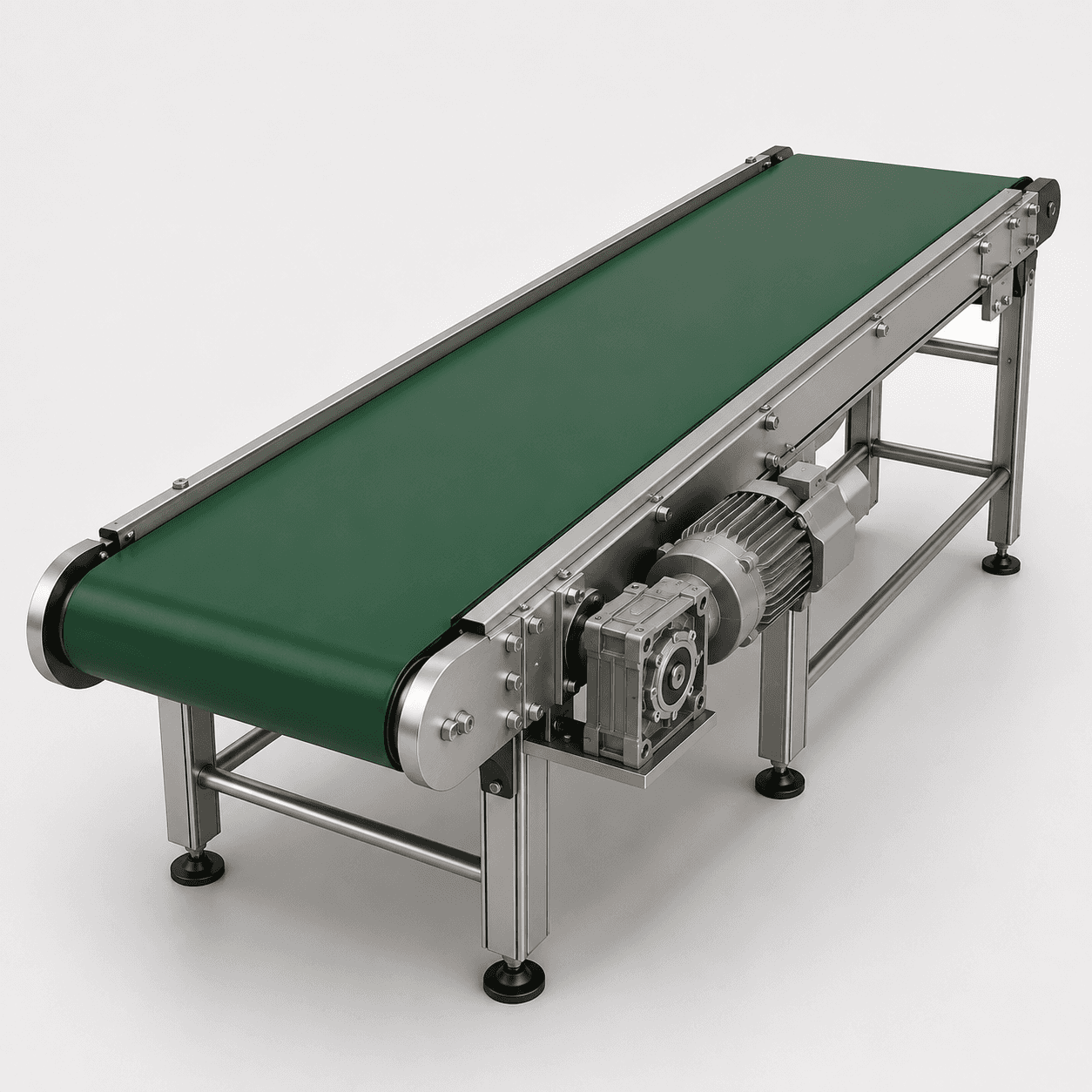
Conveyor
Guide
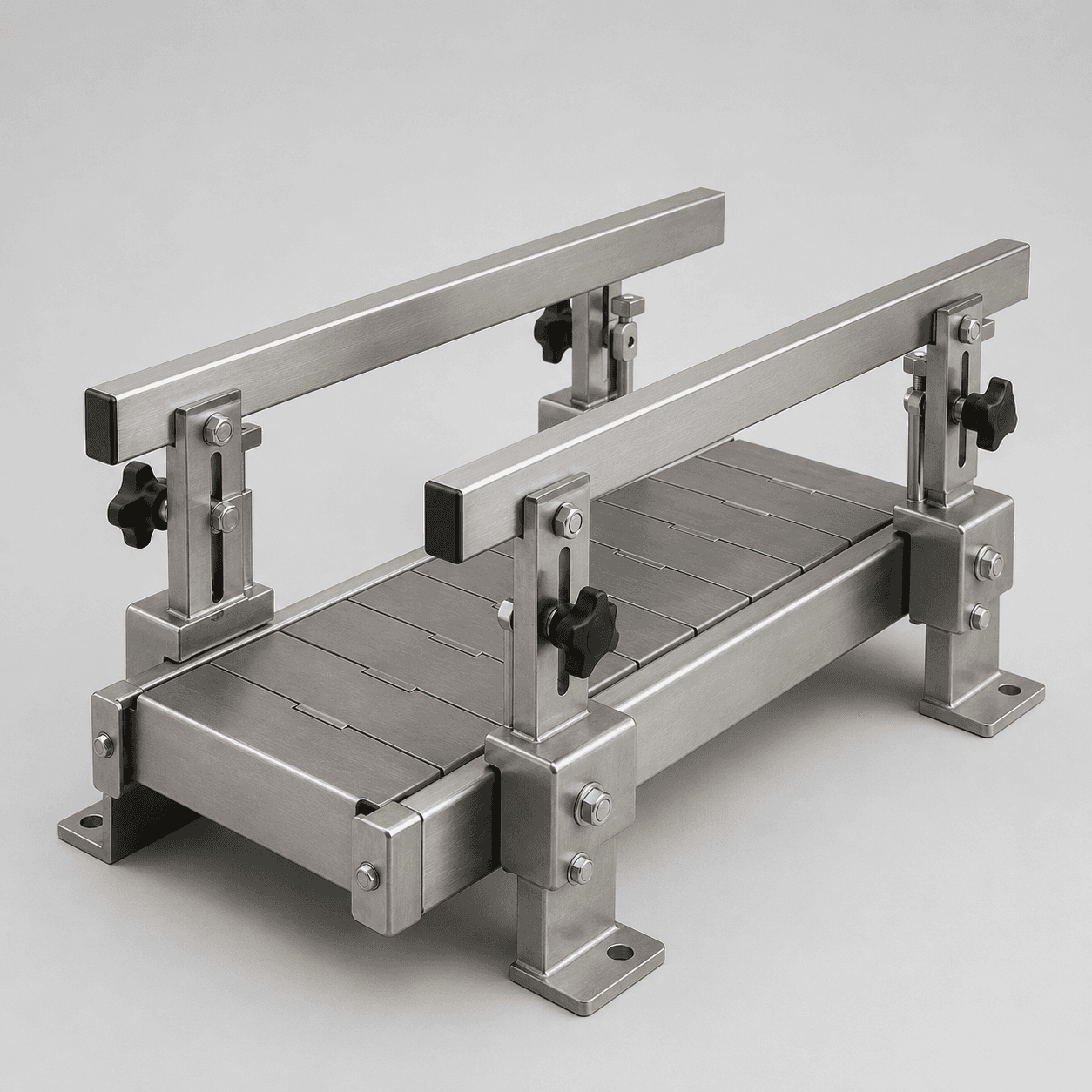
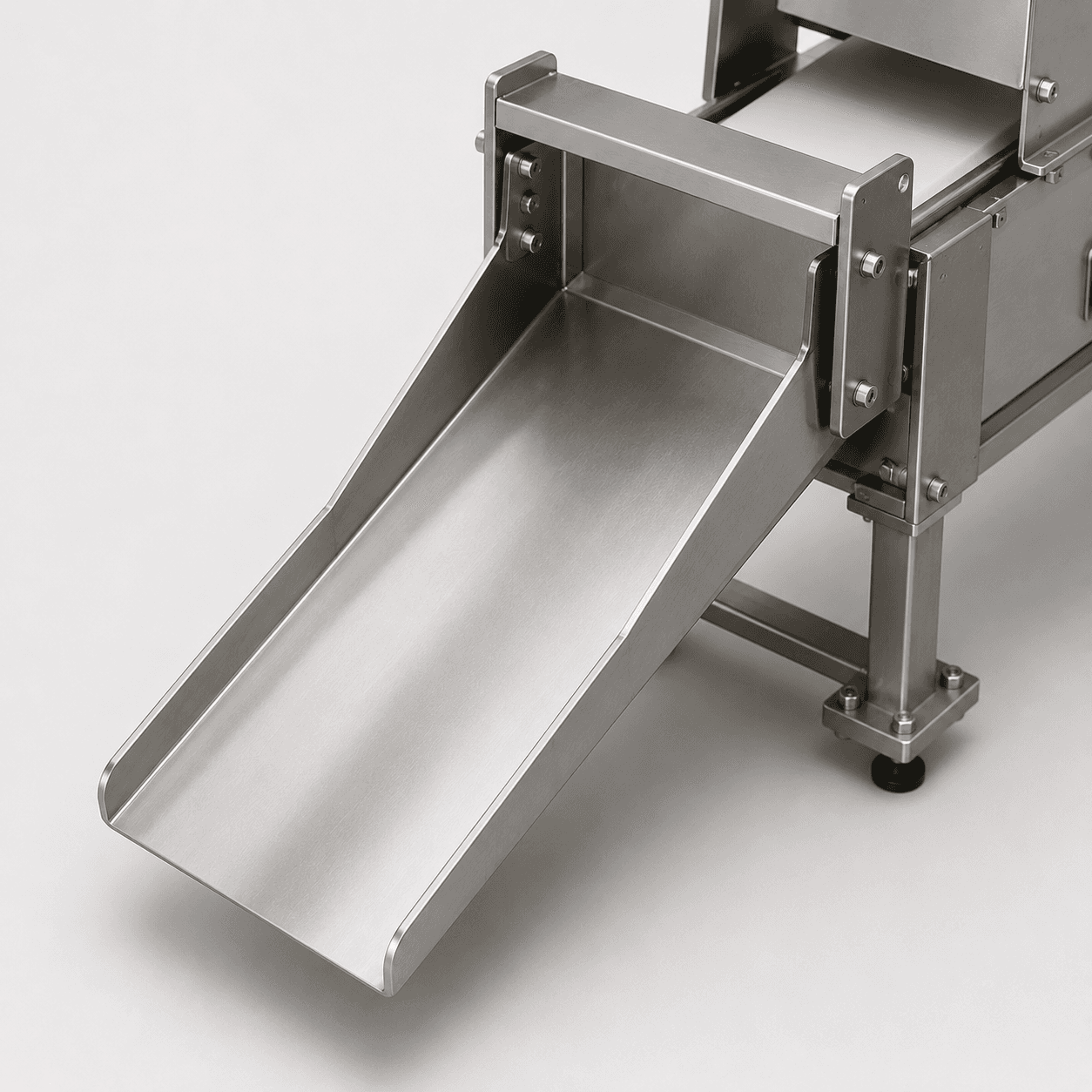
Shooter
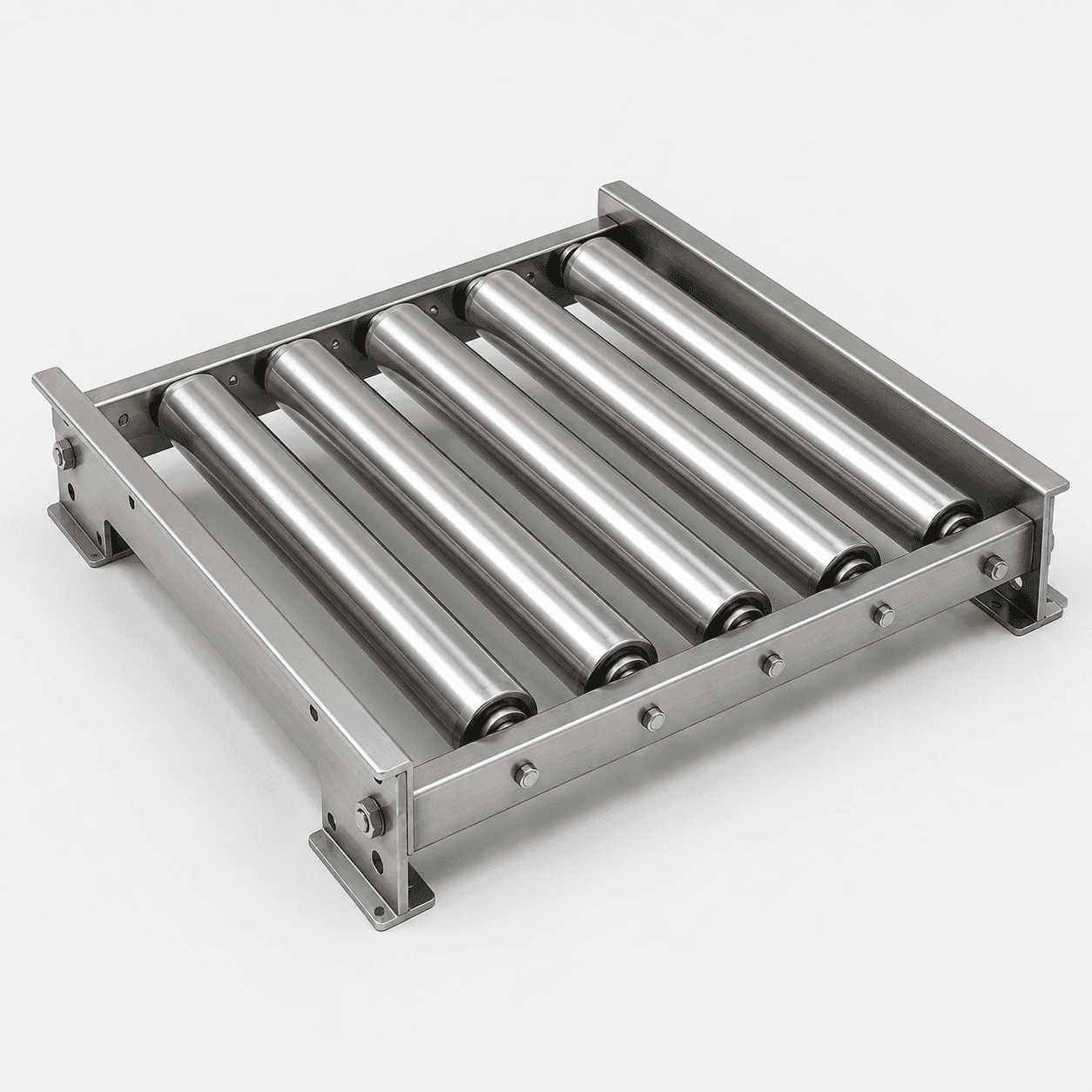
Roller
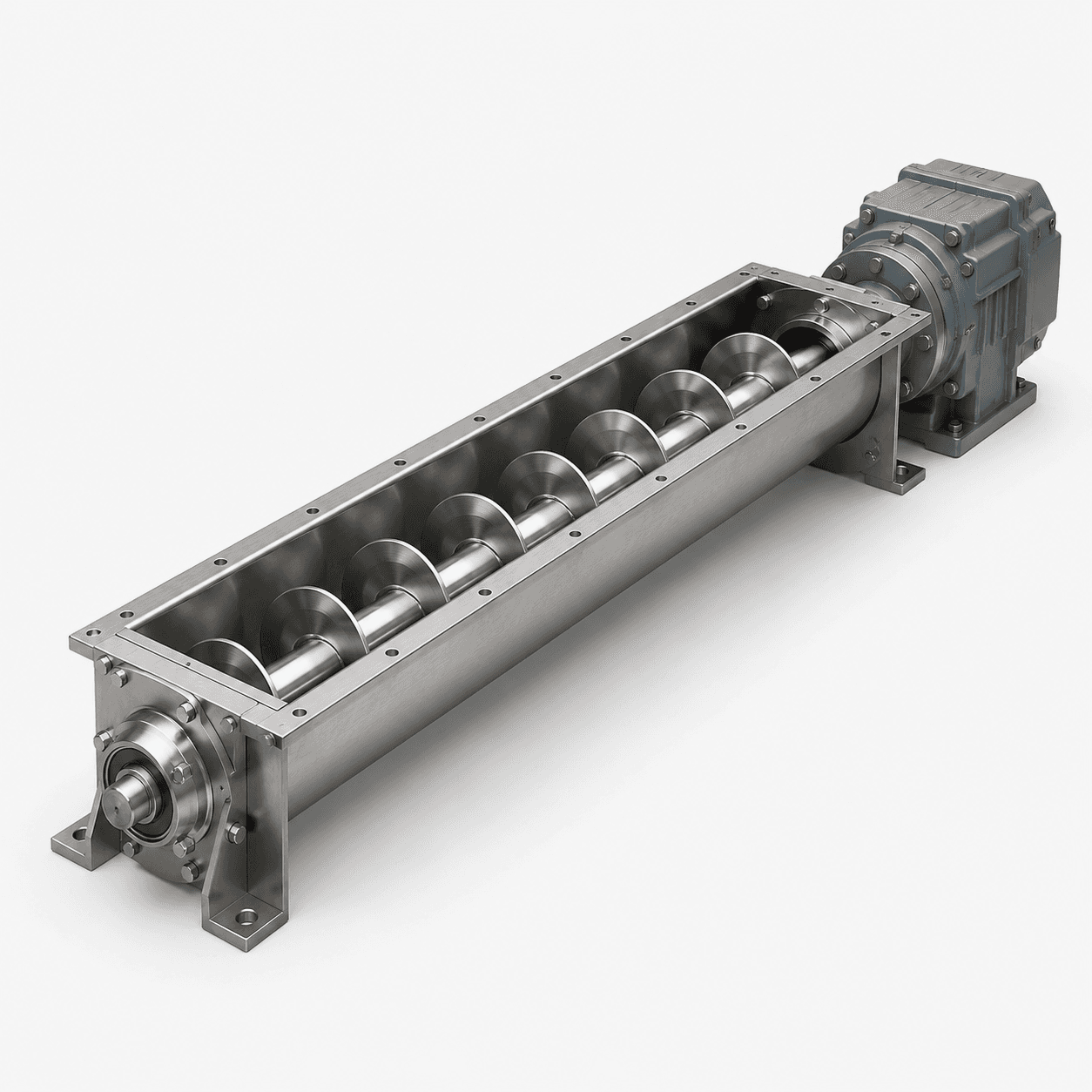
Screw
Alignment device
Discharge section
The core purpose of a material handling module is:
3. Role in Mechanical Systems
A material handling module performs several important roles inside a machine.
3.1 Creating Material Flow
A machine usually does not perform only one operation.
Most machines receive material, move it inside the system, pass it through the working section, and discharge the finished product.
In this flow, the material handling module connects the beginning and end of the process.
For example:
In this sequence, the material handling module does not perform the cutting function itself.
However, it supplies material consistently so that the cutting module can operate reliably.
3.2 Stabilizing the Working Position
Processing or assembly work can be performed reliably only when the target object is in the correct position and posture.
A material handling module does not simply move a product.
It must guide the product to the working position in a stable and repeatable way.
Key points to review include:
Does the product shake during transfer?
Does it arrive at the working position accurately?
Does its direction remain stable during movement?
Are the height, centerline, and reference surfaces aligned with the next module?
Is the stop position repeatable?
3.3 Determining Processing Capacity
The speed of the material handling module directly affects the production capacity of the entire machine.
Even if the processing module has sufficient capacity, overall output will decrease if feeding or conveying speed is insufficient.
On the other hand, if the conveying speed is too high, the following problems may occur:
Product slipping
Impact or collision
Poor alignment
Jamming
Sensor detection errors
Reduced work quality
Increased safety risk for operators
Therefore, a material handling module should not simply be designed to move quickly.
It must be balanced with the processing speed and stability of the entire system.
3.4 Creating Interfaces with Other Modules
A material handling module is directly connected to other function modules.
Typical interface targets include:
Connected Module | Interface Condition |
|---|---|
Processing / Working Module | Supplies material to the working position |
Tool / Working-End Module | Secures the relative position to the working section |
Safety / Protection Module | Protects operators from hazards around moving sections |
Control / Sensing Module | Detects product presence, position, and conveying speed |
Maintenance / Service Module | Enables cleaning, inspection, belt replacement, and jam removal |
Hygiene / Cleanability Module | Supports residue removal, drainage, and cleaning access |
A material handling module may appear to be an independent structure, but in actual design, its interface conditions with surrounding modules are extremely important.
4. Main Submodules
A material handling module can be divided into several submodules according to its function.
Submodule | Core Role | Typical Structure |
|---|---|---|
Feeding Module | Supplies raw material into the machine | Hopper, inlet, feeding tray |
Infeed Module | Draws material into the working area | Infeed roller, feeder, screw |
Conveying Module | Moves raw material or products in a specific direction | Belt conveyor, chain conveyor, roller conveyor |
Alignment Module | Aligns product direction, posture, or spacing | Guide, alignment rail, vibratory feeder |
Transfer Module | Transfers material from one position to the next | Chute, transfer arm, slide |
Discharge Module | Discharges processed products from the machine | Discharge chute, discharge conveyor |
Outfeed Interface Module | Connects the machine to the next process or equipment | Outfeed conveyor, connection plate |
5. Types of Material Handling Methods
The proper material handling method depends on the shape, weight, surface condition, stickiness, fragility, and hygiene requirements of the target material.
5.1 Belt Conveyor Method
A belt conveyor is one of the most common conveying methods.
Advantages
Relatively simple structure
Suitable for continuous conveying
Applicable to various types of products
Easy speed control
Length and width can be adjusted relatively freely
Points to Consider
Belt wear occurs over time.
Belt tension must be adjusted.
Belt tracking problems may occur.
Cleanability and foreign matter contamination must be considered.
In food machinery, belt material and residue accumulation must be reviewed carefully.
5.2 Roller Conveying Method
Roller conveying is suitable for relatively rigid products such as boxes, plates, trays, and pallets.
Advantages
Simple structure
Low friction
Suitable for heavy products
Relatively easy maintenance
Points to Consider
May not be suitable for small or soft products.
Products may fall or jam depending on roller spacing.
Product posture stability is required.
Dust, water, or residue may accumulate between rollers.
5.3 Screw Feeder Method
A screw feeder is used for powders, granules, low-viscosity materials, or applications requiring controlled feeding.
Advantages
Suitable for metered feeding
Easy to design as an enclosed structure
Good control of material flow
Inclined conveying is possible
Points to Consider
Material damage may occur.
Residue may remain inside the housing.
Cleaning and disassembly structure are important.
Clearance between the screw and housing must be managed.
Sticky materials may cause clogging.
5.4 Chain Conveyor Method
A chain conveyor is used when high load capacity or robust transfer is required.
Advantages
Suitable for heavy-load conveying
Less slipping compared with belt systems
Enables synchronized transfer
High durability
Points to Consider
Lubrication may be required.
Noise may occur.
Chain elongation and tension must be managed.
In food-contact areas, lubrication and contamination risks must be considered.
Safety covers may be required.
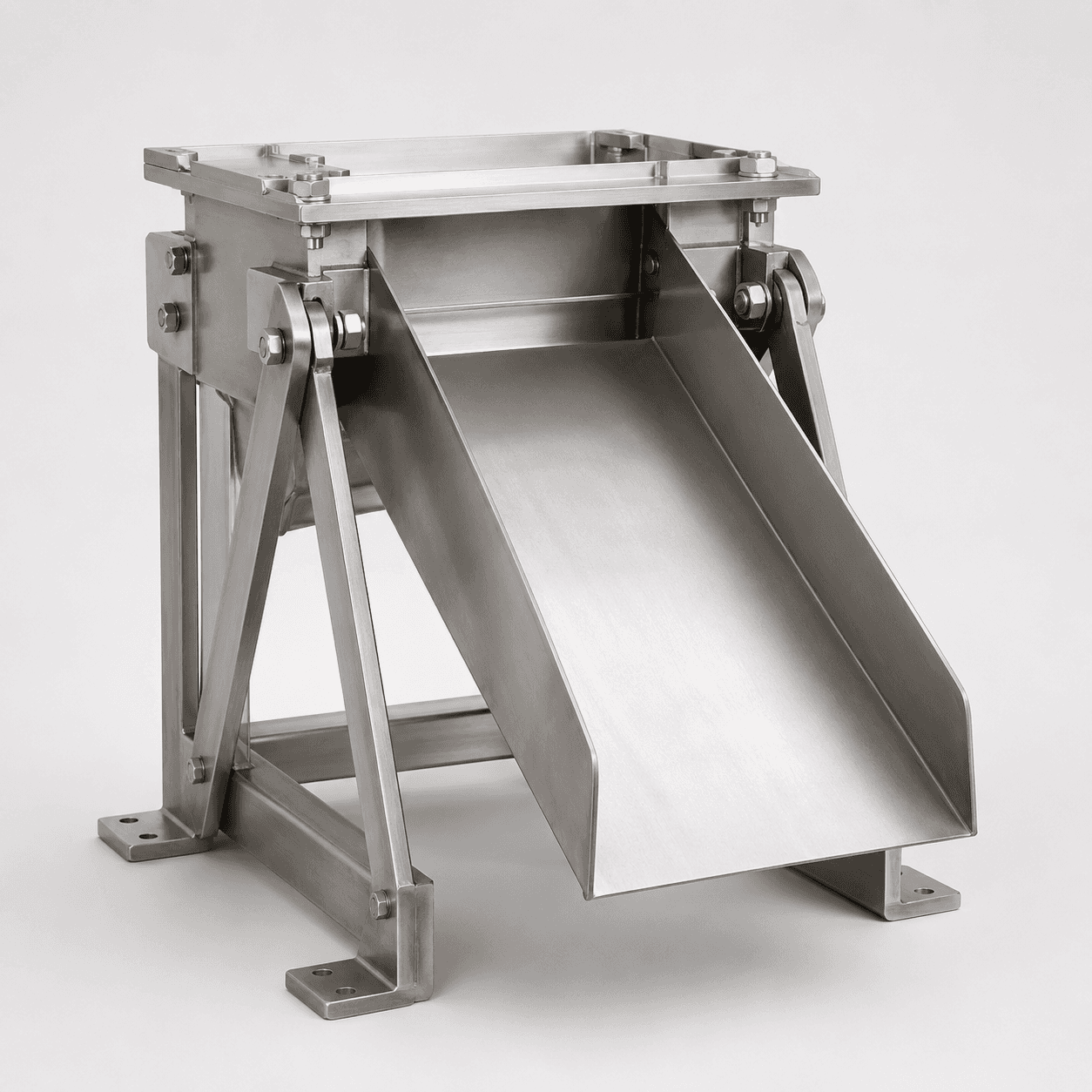
5.5 Chute Method
A chute uses gravity or an inclined surface to move products or materials.
Advantages
Requires little or no drive source
Simple structure
Easy maintenance
Suitable for discharge sections
Points to Consider
Clogging may occur if the inclination angle is insufficient.
Products may be damaged by impact.
Surface roughness and friction must be considered.
Sticky materials may cause residue accumulation.
In food machinery, drainage and cleanability are important.
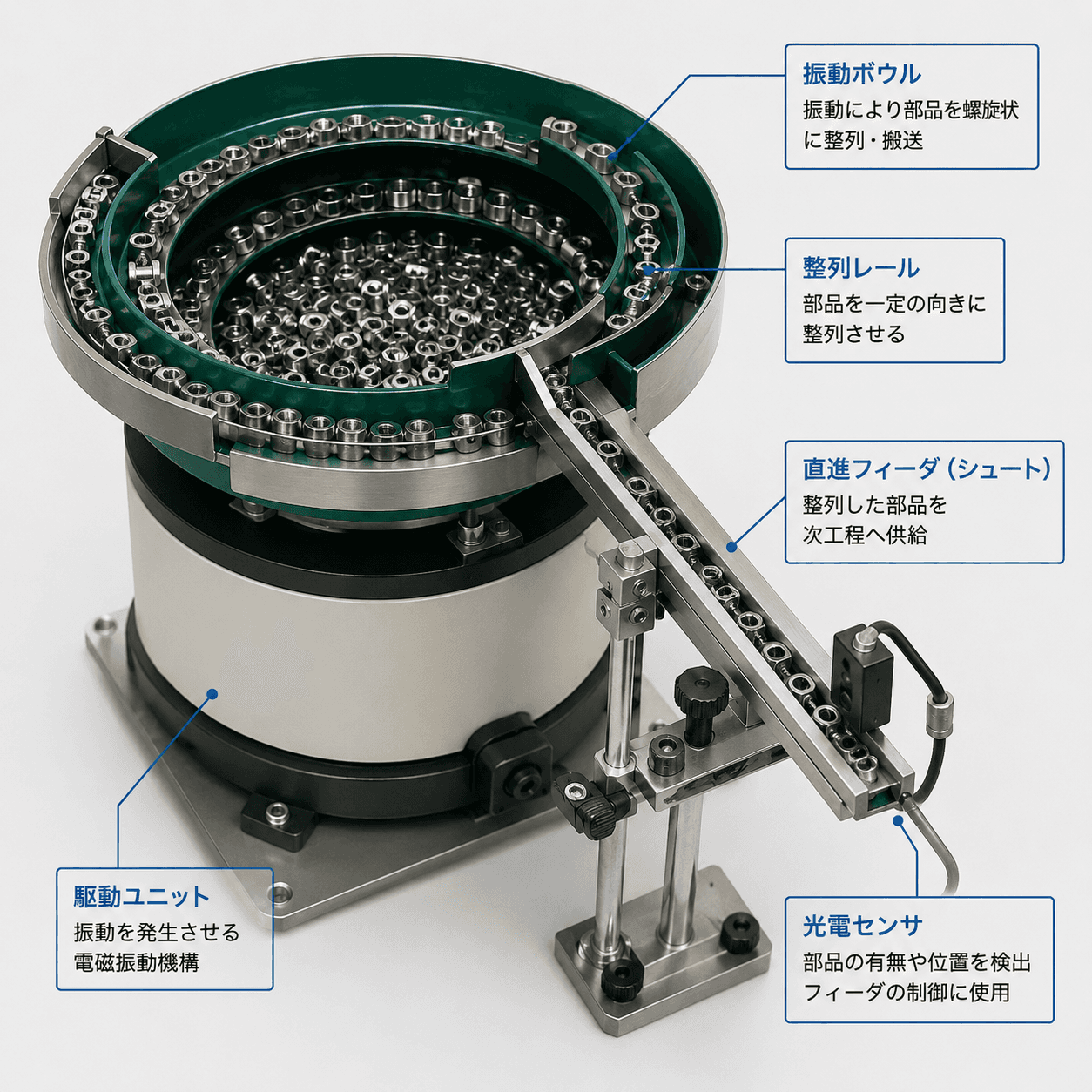
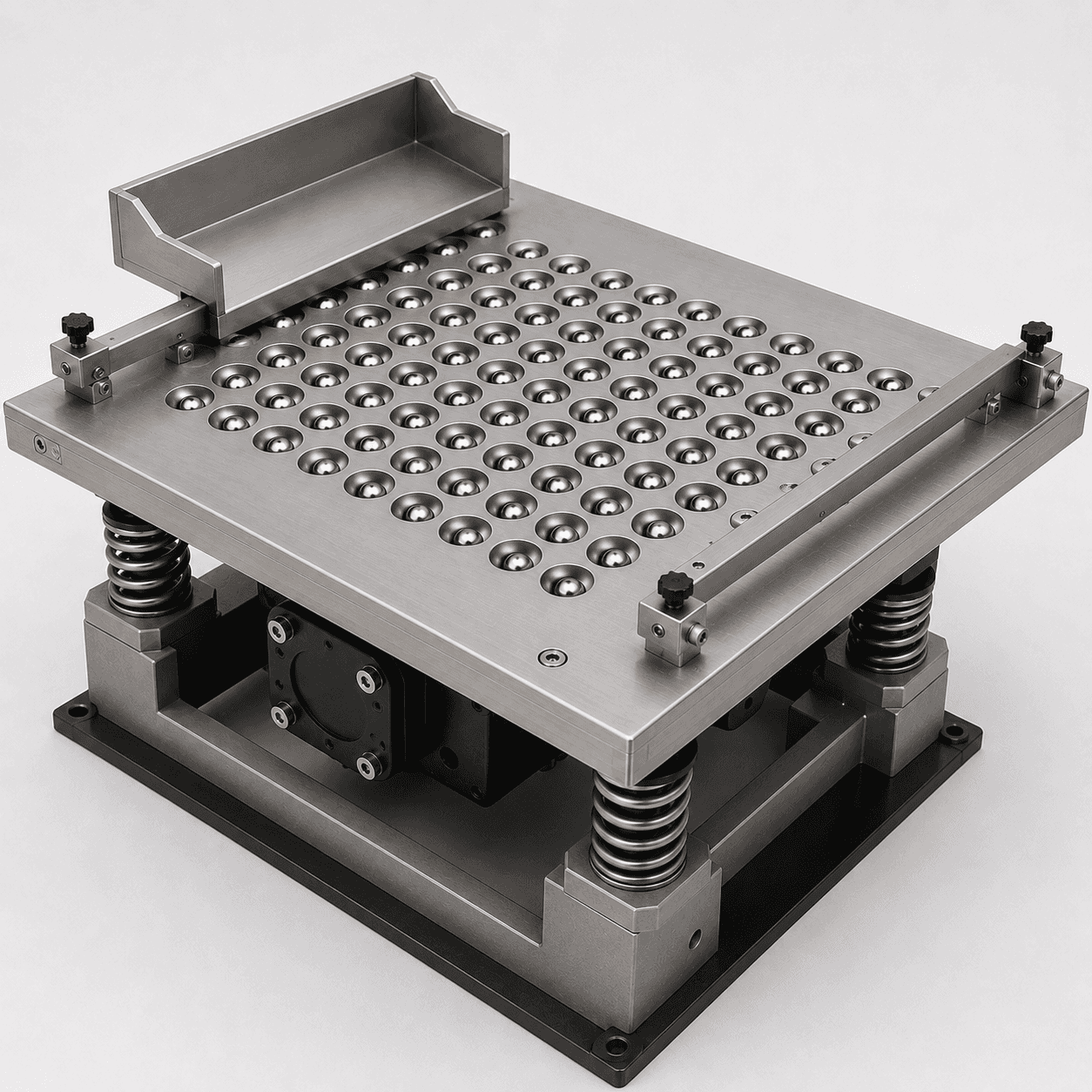
5.6 Vibratory Feeder Method
A vibratory feeder is used for small parts or objects that require controlled orientation.
Advantages
Effective for aligning small parts
Enables controlled feeding
Useful in automated production lines
Points to Consider
Vibration and noise occur.
Vibration may be transmitted to surrounding structures.
Product damage may occur.
Vibration conditions require adjustment.
Structural review is required for washdown or cleaning environments.
6. Main Design Criteria
The following criteria should be reviewed when designing a material handling module.
6.1 Characteristics of the Target Material
The first factor to confirm is the characteristics of the material or product being handled.
Item | Review Point |
|---|---|
Shape | Round, plate-like, lump, powder, liquid, irregular |
Size | Minimum and maximum size, length, width, height |
Weight | Unit weight, continuous feeding amount |
Surface Condition | Slippery, rough, wet, sticky |
Strength | Possibility of breakage, crushing, or deformation |
Directionality | Whether a specific direction must be maintained |
Temperature | High temperature, low temperature, frozen state |
Hygiene | Food-contact requirement, contamination risk |
If the characteristics of the target material are unclear, the selection of the conveying method itself becomes unstable.
6.2 Conveying Capacity and Throughput
A material handling module is directly connected to the production capacity of the entire machine.
Review points include:
Hourly throughput
Number of items conveyed per minute
Continuous or intermittent conveying
Peak feeding amount
Need for buffering
Speed difference with the next process
Material flow during stop and restart
Throughput should not be evaluated only by average values.
In real equipment, temporary overfeeding, jamming, uneven product spacing, and operator feeding patterns may become major issues.
6.3 Speed, Acceleration, and Deceleration
Conveying speed affects not only productivity but also quality and stability.
Review points include:
Target conveying speed
Initial acceleration condition
Deceleration condition during stopping
Whether the product slips
Whether the product falls over
Whether the sensor has enough detection time
Whether the speed matches the next module
Faster is not always better.
The material handling module must be balanced with the entire process.
6.4 Position and Alignment
A material handling module must do more than simply move the object.
It must supply the object to the working section in the required position and posture.
Review points include:
Conveying centerline
Product direction
Left and right guide positions
Height reference
Stop position
Product spacing
Reference surface with the next process
Sensor detection position
If alignment is unstable, processing quality, assembly quality, and inspection quality may all decrease.
6.5 Clogging and Jamming
One of the most common problems in material handling modules is clogging or jamming.
Typical causes include:
Uneven material size
Excessive feeding amount
Improper guide clearance
Insufficient chute angle
Excessive surface friction
Corners or gaps in the flow path
Residue accumulation
Unbalanced conveying speed
During design, abnormal conditions must be considered, not only normal operating conditions.
6.6 Product Damage
Products may be damaged during the conveying process.
Typical damage types include:
Scratches
Compression marks
Breakage
Tearing
Deformation
Surface contamination
Impact damage
Drop damage
In particular, food products, packaged products, precision parts, and products with important appearance quality are strongly affected by the conveying method.
6.7 Safety
Material handling modules are often located close to operators.
Therefore, the following hazards must be reviewed:
Pinch points
Entanglement hazards
Caught-in hazards
Hazards connected to cutting sections
Exposed chains or belts
Rotating rollers
Falling objects
Hand access risk during manual feeding
When necessary, safety covers, interlocks, emergency stops, and access restriction structures should be designed together with the material handling module.
6.8 Maintainability and Cleanability
Material handling modules often contact raw materials directly or contain areas through which materials pass.
For this reason, contamination, wear, clogging, and residue accumulation can easily occur.
The following points should be reviewed:
Is belt replacement easy?
Can rollers be disassembled easily?
Can clogged material be removed?
Is internal cleaning possible?
Are fasteners accessible?
Does water remain after cleaning?
Are there gaps where residue can hide?
Is the inspection interval appropriate?
7. Interface with Other Modules
A material handling module does not exist alone.
It is always connected to other function modules.
7.1 Relationship with the Processing / Working Module
A material handling module supplies the target object so that the processing / working module can operate reliably.
Review points:
Is the entry position into the working section accurate?
Does the feeding speed match the working speed?
Does the target object remain stable during work?
Is discharge smooth after processing?
7.2 Relationship with the Control / Sensing Module
Material handling modules are often stabilized by sensors and control systems.
Typical sensing items include:
Product presence detection
Jam detection
Position detection
Speed detection
Belt deviation detection
Overload detection
Discharge completion detection
The sensor position should not be chosen simply because it is easy to install.
It should be placed where stable detection can actually be achieved.
7.3 Relationship with the Safety / Protection Module
A material handling module is closely related to safety modules because it contains many moving parts.
Examples include:
Pinch points between belt and pulley
Entanglement risk between chain and sprocket
Caught-in risk between rollers
Hand access risk at manual feeding sections
Falling risk at discharge sections
Therefore, safety covers and protective structures should be considered together with the material handling module.
7.4 Relationship with the Maintenance / Service Module
Material handling modules are frequently inspected in the field.
Therefore, the following points are important:
Belt tension adjustment
Roller replacement
Guide position adjustment
Jam removal
Sensor cleaning
Residue removal
Replacement of worn parts
The designer must consider not only the operating function, but also how a person will access and inspect the module after the machine stops.
8. Application in Food Machinery
Material handling modules are especially important in food machinery.
Food materials may have the following characteristics:
Wet
Sticky
Slippery
Soft
Easy to break
Frozen
Irregular in shape
Likely to leave residue
Sensitive to contamination
Therefore, material handling modules in food machinery require more design review than many general industrial machines.
8.1 Important Design Conditions in Food Machinery
Design Condition | Description |
|---|---|
Cleanability | Areas in contact with raw materials must be easy to clean |
Drainability | Water and cleaning fluid must not accumulate |
Food-Contact Surface | Material, surface roughness, and gaps must be managed |
Contamination Prevention | Lubrication areas, bearings, and fasteners must be separated from food-contact areas |
Tool-less Disassembly | Belts, guides, covers, and contact parts should be quickly removable |
Residue Prevention | Spaces where material can become trapped or accumulate should be minimized |
Washdown Compatibility | Motors, sensors, and electrical parts must be protected |
8.2 Common Problems in Food Machinery
Residue accumulation under belts
Raw material trapped between rollers
Contamination in gaps between guides and frames
Water accumulation under discharge chutes
Foreign matter accumulation around fasteners
Cleaning water entering sensor areas
Possible lubricant contamination around bearings
Too many parts requiring disassembly for cleaning
These are not merely cleaning problems.
They are structural problems that should be addressed during the design stage.
9. Common Design Mistakes
Common design mistakes in material handling modules include the following.
9.1 Deciding the Conveying Method Too Early
For example, if the designer starts by saying, “Let’s use a conveyor,” the characteristics of the target material and process requirements may not be reviewed sufficiently.
A better approach is:
9.2 Ignoring Clogging Conditions
If the design is based only on normal flow, problems may occur in the actual field.
The designer must consider:
Overfeeding
Abnormal product posture
Material lumping
Product jamming
Residue accumulation
Operator access for removal
9.3 Poor Maintenance Accessibility
Conveyors, rollers, guides, and sensors are frequently adjusted and cleaned in the field.
If frames or covers make access difficult, the actual usability of the equipment decreases.
9.4 Not Considering Interfaces with Surrounding Modules
A material handling module is connected to upstream and downstream processes.
If height, centerline, speed, direction, or reference surface do not match, the entire process becomes unstable.
10. Design Checklist
The following questions can be used when designing a material handling module.
10.1 Target Material Review
What are the shape, size, and weight of the target material?
Is the material likely to break or deform?
Is the surface slippery, wet, or sticky?
Is orientation required?
Are there food-contact or contamination prevention requirements?
10.2 Function Review
Does this module perform feeding, conveying, alignment, transfer, or discharge?
Is the movement continuous or intermittent?
Does product spacing need to be controlled?
Does the speed match the next process?
Is a stop position required?
10.3 Structure Review
Is the selected conveying method suitable for the target material?
Which method is most appropriate: belt, roller, screw, chute, or chain?
Does the structure reduce clogging and jamming?
Does it minimize product damage?
Can speed and tension be adjusted?
10.4 Safety Review
Are there pinch points or caught-in hazards?
Can the operator’s hand access a hazardous area?
Is a protective cover required?
Is emergency stop access available?
Is it safe during cleaning and inspection?
10.5 Maintenance and Cleaning Review
Can belts or rollers be replaced easily?
Can clogged material be removed easily?
Is internal cleaning possible?
Does water remain after cleaning?
Is there enough space for inspection and adjustment?
11. Summary
A material handling module is a function module that moves, aligns, feeds, transfers, and discharges raw materials or products inside a machine.
Although this module does not directly process the product, it has a significant influence on the flow, productivity, quality, safety, maintainability, and cleanability of the entire machine.
Designing a material handling module should not stop at simply selecting a conveyor or feeder.
The designer must review the characteristics of the target material, throughput, speed, alignment, clogging, product damage, safety, maintainability, and cleanability together.
In food machinery, cleanability, drainability, food-contact surfaces, contamination prevention, and tool-less disassembly are especially important.
Therefore, a material handling module should be understood not as a simple transfer device, but as a core design module that stabilizes the functional flow of the entire machine system.